
I learned to drive on an Oldsmobile Cutlass Supreme in the 1980s.
I am under five feet tall, and the seat of that 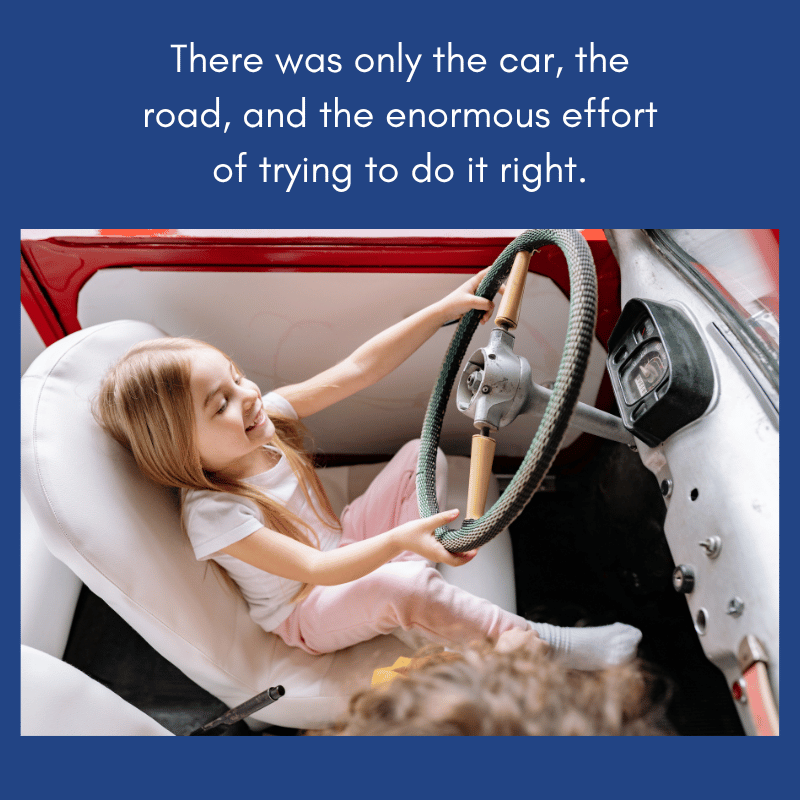 car was not built with me in mind. My parents solved this practically and without fanfare: they bought rocking chair cushions and propped me up until I could see over the steering wheel. It was the first car we owned with electric windows — a small miracle at the time — and I failed my first driving test in it. When I took the test a second time, I borrowed my pastor’s wife’s Toyota Corolla. I passed.
I tell you this because I remember how much of me that car required. Every bit of my attention was on the task. Both hands on the wheel, eyes scanning, brain narrating: check the mirror, signal, don’t brake too fast, watch the line. There was no casual conversation. There was no noticing the scenery. There was only the car, the road, and the enormous effort of trying to do it right.
The Mindless Errand Run
Last week I ran a series of errands and found myself adjusting the seat and mirrors without thinking about it. I glanced at the dashboard camera. My phone connected to the sound system automatically, and music I hadn’t consciously chosen began to play from a cloud somewhere I couldn’t point to on a map.
I drove. I thought about other things. I arrived.
This is what habits do. They run quietly in the background so that the rest of you can be present for what actually matters.
We are, all of us, remarkable habit machines. We stack behaviors, adapt them, refine them — and then we stop noticing them entirely. The habits we’ve built around driving are a perfect small example: mirror check, seatbelt click, hands on the wheel. We don’t decide to do these things. We just do them. And because we do, we have space for everything else.
The Parking Lot
When our youngest was learning to drive, I took him to an empty parking lot to get the feel of the accelerator and the brake before we ventured anywhere near actual traffic.
He pressed the brake for the first time going less than seven miles an hour.
We were both slammed into our seatbelts so hard I thought we might have bruises.
He had done exactly what made sense to him: to stop the car, you press the pedal. All the way down. Firmly. The logic was sound. The feel wasn’t there yet.
That’s the thing about habits — you can know the right move and still not have internalized it. The knowledge comes first. The feel comes with repetition. And the repetition, at least the good kind, comes from caring enough to keep showing up.
He cared. He wanted to get it right. And eventually, he did.
What Stewardship Does
There’s a word I come back to often in my work with leaders: stewardship.
Stewardship is the practice of taking care of what you’ve been trusted with. It’s different from ownership — it carries a sense of responsibility to something beyond yourself. A mission. A team. A set of young people who needed to be driven to rehearsals and lessons and Saturday morning practices for years on end before they could drive themselves.
Honestly, I wasn’t thinking about habits at all during those years. But I showed up for carpool. I made dinner most nights that had some nutritional value. I did the things that were required because people I loved were depending on me. Stewardship didn’t just motivate the habits — it built them, quietly and consistently, over time.
This is what I keep noticing: willpower is a poor foundation for lasting habits. So is self-improvement culture, with its streaks and scorecards and perpetual focus on what we’re not yet doing well enough. What actually builds habits — durable, stackable, freeing habits — is commitment to something we care about. Love of a person, a purpose, an organization. The external responsibility does the internal work.
Freeing the Leader
Here’s what I’ve seen in leaders who have done this work — who have built the habits of stewardship over time:
They have room.
Room to think. Room to listen. Room to be creative with their teams and curious about what they’re building together. Because the operational habits are running quietly in the background, they’re not spending all of their attention just keeping the car on the road.
The new driver uses every available resource just to operate the vehicle. The experienced driver operates the vehicle — and has a real conversation, notices something worth noticing, responds to what’s actually happening around them.
Leadership is the same. Early in a role, or in a season of organizational upheaval, we grip the wheel hard. Everything requires attention. That’s appropriate — it’s where we are. But the goal is to build enough good habits, grounded in enough genuine commitment, that we free ourselves to lead at the level the moment actually requires.
Not just managing. Leading. Not just keeping the car on the road. Deciding where it’s going.
 Before You Pull Out
There are still a few things I do every time I get in the car, no matter how many yearsI’ve been driving. I adjust the mirrors for where I am sitting today. I take a breath before I back out. Small calibrations that take seconds and cost nothing.
The habits of stewardship work the same way. They don’t demand perfection. They ask for presence, consistency, and enough care to keep showing up.
You learned the feel of it somewhere. You’re still learning it now.
The road ahead has room for both.
0 Comments