
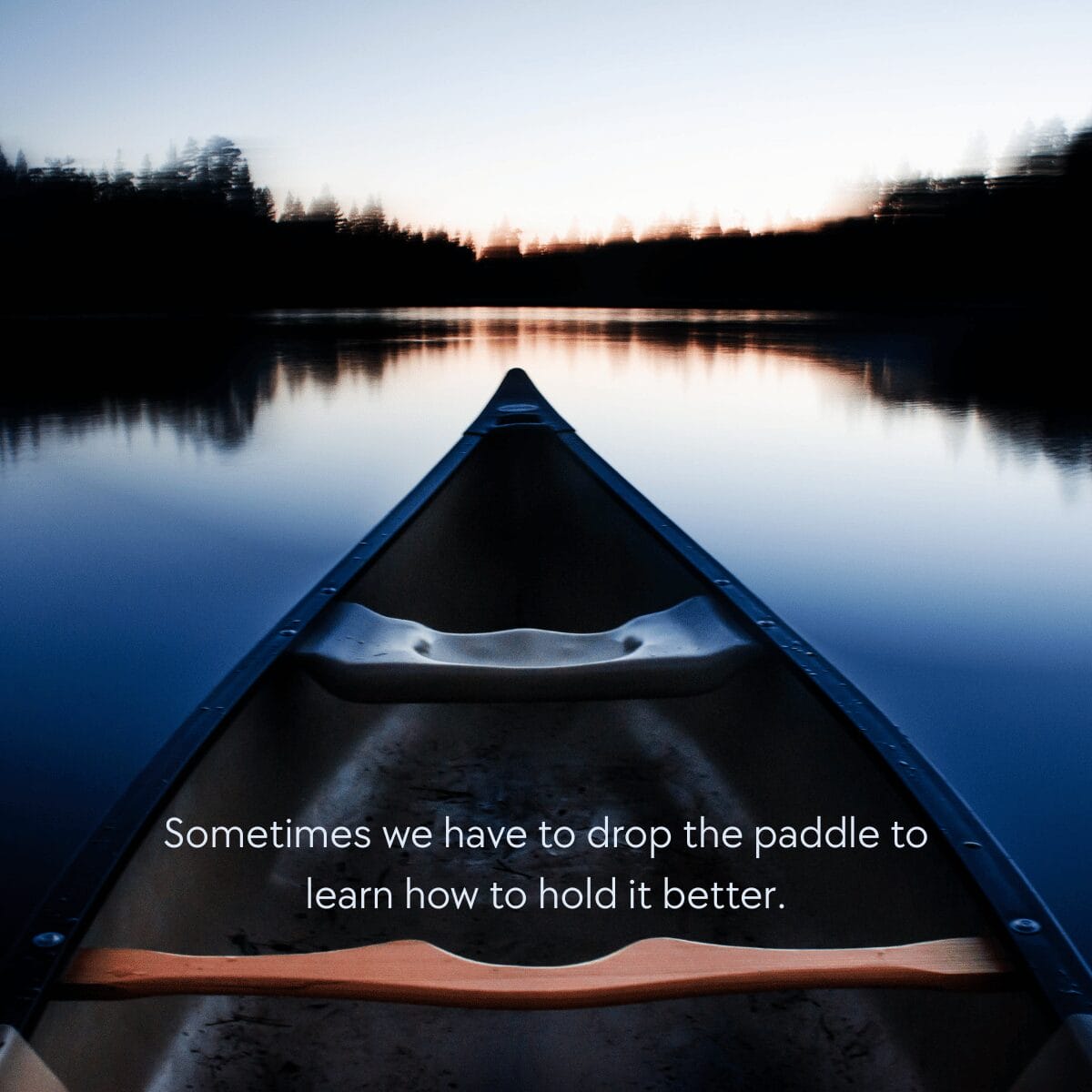
The first (only?) time Marc and I attempted canoeing together wasn’t pretty.
I was in my second trimester of pregnancy. We had been married for just four years. And we were leading a camping trip with a dozen high school students from the boarding school where we had been working for only a few months.
Oh. And we had both canoed before. So, we both (independently, like only first borns can) knew the right way to do it.
I sometimes wonder what the students heard and saw. I know the other faculty on the trip witnessed the strain. One later described it as “like getting to watch a real-live marriage encounter.”
By the time we crawled into our tent that night (again—what pregnant woman says yes to sleeping on the ground?), I was tired, frustrated, and mad.
We were leading.
But we were not holding it well.
Holding leadership in moments of pressure can be a true test.
Sometimes you anticipate a challenge. Sometimes it darts into the road like a squirrel and you’re reacting before you’ve even taken a breath.
Pressure does what pressure does. It presses. It narrows.
It squeezes.
When cortisol spikes, our field of attention narrows. We literally see fewer options. In what feels like fight or flight, our responses can become sharp and fast. A snap reaction in those moments may not reflect how we want to lead — or who we want to be as leaders.
That’s not a character flaw. It’s chemistry.
 Leadership, as I understand it, is the practice of showing up in alignment with who you are, holding space for people and purpose. Pressure reveals whether we are leading from alignment — or from adrenaline.
One of the greatest myths of leadership is that a leader knows what to do at all times and at a moment’s notice.
But steadiness is not the same as speed.
One of the most transferable coaching skills I have applied to leadership is not being afraid of silence.
Even a few deep breaths can widen the field again. A few intentional seconds can bring your nervous system back toward regulation. From there, you can begin to see more than one option. You can move from tunnel vision to fuller vision.
And then — instead of reacting — you can ask:
What does this moment need?
Not, “How do I win this?”
Not, “How do I prove I’m right?”
But what is needed here?
Sometimes holding leadership isn’t about holding the room.
Sometimes it’s about holding yourself long enough to choose your next move with care.
Marc’s and my canoe trip will never make our greatest hits album of leadership moments.
It was messy. It was humbling. It was not the example we had hoped to set.
But it has made it onto our greatest lessons learned list.
We don’t grow as leaders because we avoid pressure. We grow because we notice what it draws out of us — and we choose differently next time.


0 Comments