
Geof Brown is the CEO of the National Association of Personal Financial Planners. In this episode of Concord Leaders, he talks about the pressure of living into a press release. And how listening transformed his 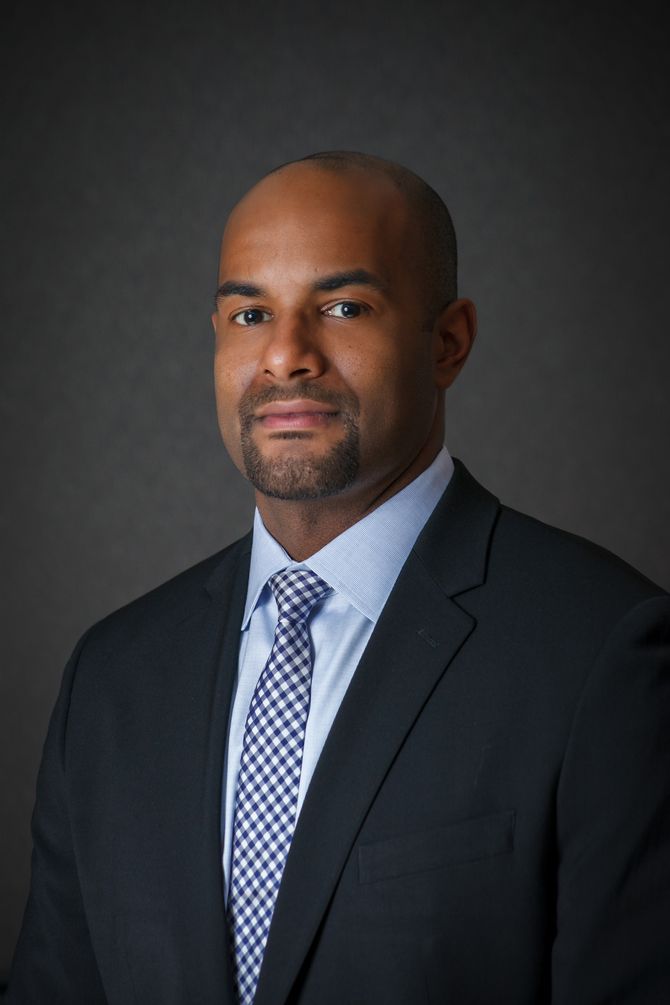 ability to keep a diverse set of members moving toward a common goal.
202 Driving Toward a Future-Oriented Vision with Geof Brown
Listen Now
Listen to the Concord Leaders Podcast on your favorite podcast service



Transcript
Marc Pitman: Welcome to the Concord Leaders Podcast. I’m Marc Pitman, the CEO of the Concord Leadership Group. Today, our guest is Geof Brown. He’s the CEO of the National Association of Personal Financial Advisors. Geof, I’m so glad you’re joining us.
Geof Brown: Thank you for having me, Marc.
Marc Pitman: Where are you based out of?
Geof Brown: We’re based out of Chicago. I’ve been here since 2006. I’ve been with NAPFA since 2013.
Marc Pitman: Nice. I enjoy Chicago. That’s really cool.
Geof Brown: Awesome. It is a great city to live in nine months out of the year.
Marc Pitman: That’s a really good point. Having come from Maine, now living in Greenville, South Carolina, I can appreciate the lack of snow and cold — it’s transformational for me anyway. As a guest of the Concord Leaders Podcast, I’d love to ask people, what is it that you love about leadership? You’ve been the CEO now for a few years and you’ve run other organizations. What do you find most enjoyable about leading?
Geof Brown: That’s a great question. I’m a 20-year association management professional, and so that’s typically the lens through which I view leadership and my personal and professional values. For me, it’s really about working with diverse groups of people and striving to build communities of practice. At their core, professional associations are really about bringing people together for a common goal or common objective, usually under the guise of a profession or an industry, and it’s that practice that really is where I get my juice from leadership. I’ve always gravitated to situations where we’re building communities of practice, and when you get into that situation, you find that there are people that are united by a common purpose. Even though we have individuals that do the same thing, meaning fee-only financial advisors, there’s so much uniqueness that they bring to the table, and it’s that intersection of their similarities and their differences that make associations so special and the work that I do as an association management professional so exciting.
Marc Pitman: That’s really cool. When you said diverse, I immediately thought of almost simultaneously glory and joy, because diverse opinions and gifts, mix and backgrounds, could be wonderful, but there’s also conflict right there with the joy. So is there a time where you’ve tried to lead an effort or a project and it didn’t work?
Geof Brown: Oh, for sure, for sure. You’re human. You know, the one thing, or two things, that have been helpful — before I dive into it — is making sure that everybody understands that we’re driving toward a future-oriented vision and really trying to deliver on whatever the organization’s mission is. I found that by defining and pursuing desired outcomes with determination, commitment, and passion, you can cut through some of that conflict that may arise because people are different. I’ll talk specifically about NAPFA. I mentioned that we have financial planners and advisors that all do the same thing, but the situations they come from can be very different. Our organization is made up of solo practitioners and enterprise-level financial planning firms. They may do the same thing, but their business and professional needs may be in conflict with one another. The larger your firm gets, the more of a focus you have on business strategy, human capital management, technology, things like that. If you’re a solo practitioner, you’re probably focused more on “help me market my business, generate demand for my services, help me connect with other solo practitioners,” things of that nature. And so it’s really interesting how, when you get people together that do the same thing, but their professional circumstances are different, you need to navigate some of those waters. And so I think that’s one of the challenges I’ve dealt with for the last seven years working here at NAPFA — it’s really just about bringing people together to talk about what their similarities are, meaning that they’re all fee-only financial advisors, but then allowing them time and creating spaces for them to explore where they’re different. So we’ve been able to navigate that by creating opportunities for different communities within the larger association to commune with one another and to think about, “Hey, this is where our segment of this profession is really going, and this is how we can support each other under the guise of the association.” I found that to be successful in the NAPFA setting and in prior CEO roles — one that I worked with was the Giving Institute. It was a very similar situation. We had fundraising consultants that were solo practitioners and we had some large enterprise-level consultancies that did great fundraising work. And so allowing those individuals that had similarities to get with one another was really a successful practice for us.
Marc Pitman: So I can totally see the inherent conflict in that, because just like you said, they’re joining an association for different goals. So what is the common vision — for NAPFA, it’s the similarities, fee-only — well, what’s the common vision you have them driving toward?
Geof Brown: Yeah, you know, I think the common vision is that the public recognizes NAPFA members as fee-only fiduciary financial planning professionals, that they’re the trusted advisors of choice because they represent the highest professional and ethical standards, regardless of the size of your firm or where you live. It’s that vision that allows all of our members to come together and work for a common goal.
Marc Pitman: Okay.
Geof Brown: I think it’s very core — it’s really about how do we service the public in the most appropriate and future-oriented manner.
Marc Pitman: Interesting. Now I was going to ask you too, with 20 years of association leadership — associations have changed quite a bit. People can find things online, they can coalesce and find each other online or through different media or tools. Is it the common vision that’s really attracting people? How are you able to navigate the change that you see?
Geof Brown: Yeah, I mean, the challenges we were dealing with when I started, back in 2000, are very different than the challenges we’re dealing with now. And it’s really about technology, it’s really about making sure that we stay relevant to the business environment, and then also creating opportunities for people to come together. You can certainly find information and resources by doing a simple Google search, but that doesn’t mean that you can have that peer-to-peer connection with someone who is in the same profession or line of business as you. And I think that’s where associations will continue to strive. Yes, it’s not easy. I think members have certain expectations of associations, and so we have to be able to meet those needs. Some of the things I’ve noticed that people are looking for is more experience-oriented — meaning that we need to almost Amazonify the association experience, meaning that we’re serving up personalized experiences for individual members, which is a huge challenge because we don’t have Amazon’s technology resources. We don’t have Amazon’s budget. But we still have to figure out ways that we can differentiate ourselves from just that pure virtual experience. I was having a conversation with a peer earlier this week where I basically shot holes in the whole association experience, because we were talking about this potential health crisis that’s going on in the US, and I was like, “Wow, I can’t believe I just did that in five seconds.” And so it’s really keeping that in the back of our mind as we’re designing what we want the future of this organization to look like.
Marc Pitman: And for our listeners, at the time of this recording, the coronavirus, COVID-19, is continuing — testing’s getting better, so there are more and more cases being found, and we’re just trying to figure out how this is going to impact all sorts of aspects of our culture. So, wow, it’s never-ending, I guess. It’s always a new thing. That’s interesting. So was there a time that something just kind of crashed and burned, or didn’t work the way you expected it to? Did you get to share that?
Geof Brown: Oh, for sure, for sure. I don’t know if it’s crash and burn, but it was definitely a leadership challenge for me. I go back to when I first took this job seven years ago — it was my first CEO role in a standalone association. Previously, I had been in a managed-services environment. So I followed a long-term, well-regarded CEO — she had been with the organization for about 20 years. Luckily, I inherited a very sound foundation and clear direction from volunteer leaders that we needed to look to the future. But there were a lot of challenges, because as you noted, the association experience and demands from members were changing. And so the challenge for me was really trying to understand how do we preserve the core, the culture, and the secret sauce of what made this organization special for 30-plus years, but then also capitalize on the opportunities to drive to the future. We’re in a very crowded market, and striving for differentiation is key. There are a lot of associations out there for financial advisory professionals. So we had to make sure that we had the right people and systems to deliver on our long-term strategy. And at the beginning, I wanted to be a hard-charger and just drive, drive, drive, but ultimately I learned, after about six months, that you have to stop and you have to listen, and listen some more, and listen again, to really understand where people are coming from and what they want from their affiliation with the association. And then from there, we can articulate a vision for the future and how we want to engage our constituents. And then you have to really be intentional about building relationships and identifying allies that are going to jump on the bus and support the work we need to do to get to that desired future state. Were we successful? TBD. Seven years later, there’s still a lot of work to be done, but we’ve got a lot of things going in the right direction. Membership is growing, demand from the public for the services NAPFA members offer is growing, but there’s still work to be done.
Marc Pitman: But they’re listening — what an interesting challenge, because I think so many times in our organizations, we think leadership is setting the direction and driving it forward, and listening almost seems vulnerable, or like we’re not doing our job. How did you adjust to that? Did it just become glaringly obvious that you needed to listen, or…?
Geof Brown: It did feel risky, because I had that kind of imposter syndrome, if you will. I wanted the volunteer leadership, I wanted the membership, I wanted our external stakeholders to think, “You know what, Jeff — Geof’s the new CEO, he’s got it covered.” The press release announcing my hiring was very glowing, and I really wanted to live into that, and I thought I had to have all the answers and I had to have the roadmap. But along the way, when things weren’t unfolding according to my 30-60-90 day plan, I talked to my mentor, and he said, “You need to step back. You really need to understand the circumstances of the people that you’re working for, the people you’re working with, and the people you want to influence.” And that’s where I came to the realization that it really had to be about listening. I want to call it a listening tour — I didn’t really leave my office, but I definitely called a lot of people. Some of them were just, “Let me go through the membership database and pick some people at random.” Others were, “Here’s someone that over the last month or so I’ve noticed has a good sense of what’s happening in the financial planning ecosystem, and I should reach out to that individual to understand what they think about who we are as an organization and where our opportunities and challenges exist.”
Marc Pitman: Wow, that’s so smart. I find that you get the best information from doing the listening, but thanks for just affirming what we all know — that it does feel risky at first, because you’ve got the press release to live into. I love that. Well, I am shocked, as it happens with these podcasts, they go quickly — the conversation goes really quickly. I know people are going to get a lot out of this. I have a page full of notes. As you think back, reflecting on leadership, what would be something you’d recommend people do if they did nothing else today after listening to this conversation? Would there be one tip or thing that they should do?
Geof Brown: I think it’s really about just understanding your own personal leadership journey and having a sense of the legacy and impact that you want to leave. I think constantly stepping back and reevaluating your progress under that lens is reaffirming, and it will give you a sense of where you need to go in the future.
Marc Pitman: That is great. For everybody that wants to listen to this again and listen to the other conversations, you can go to www.concordleadershipgroup.com/podcast. Until our next time, remember that healthy organizations start with healthy leaders.