Marc Pitman: Welcome to the Concord Leaders Podcast. I’m Marc Pitman, the CEO of the Concord Leadership Group. Today our guest is Julie Capaldi. She’s the president of United Way of Pickens County, and she’s been at that United Way for 23 years. Julie, it is a thrill to have you on the show today.
Julie Capaldi: Well, thank you very much for having me, I’m honored.
Marc Pitman: 23 years at the same organization, what was that like?
Julie Capaldi: Well, really, to be honest with you, Marc, the first years were really awful and hard, and I thought many times of throwing in the towel, but there was just something about the beauty of where we live — I didn’t want to move again, and I’m not a quitter. So I just kept plugging away with it.
Marc Pitman: What do you enjoy most about leading, or being in a leadership position?
Julie Capaldi: Well, I’ve thought about that a lot when you posed that question to me yesterday. And I think it’s because I’ve really worked for a lot of bad leaders, and I wanted to create an environment where people wanted to run to work and walk home. That’s really kind of been my ultimate goal. And you can tell I’ve been successful at that, because people who come to work here stay forever — quite a few of my colleagues have been with me 16 and 17 years. And I believe with all my heart in the mission of United Way of Pickens County. That’s why I like to lead it. I believe in the mission, the work — it’s not like going to work every day, it’s like purpose, my life’s purpose. And then the people I work with, I just love working with them.
Marc Pitman: I love a place where people want to run to work and walk home. What are some things you’ve done to help foster that kind of environment?
Julie Capaldi: Well, first of all, Marc, for a while I was having a little bit of turnover in some of my positions. So I actually hired Mary Ray Connor from Greenville, a personnel consultant, and really embraced the whole DISC concept — and I know you’re familiar with that, because I have your book, your audiobook, that I listen to when I exercise, and I know you believe in DISC. So I really looked at the roles we had in our organization and what were the traits of the people who would be happiest in those roles. And so I started making good hires. And also, by understanding the people who work with me, my colleagues — I understand how they are about stress, I understand them and know them, and they know me. And I think that’s one of the things that’s created the work environment. And everyone who works here has — I call it the shared responsibility model — everyone is really, really invested in their job and the outcomes we’re trying to reach. That’s probably the most important thing.
Marc Pitman: That’s so exciting to hear. I love thinking about — often we take these assessments, we think about ourselves and our own response, but I love that you’re also putting it into making good hires. That’s really smart.
Julie Capaldi: Well, you know, it was funny, after the last bad hire — and how I knew they were bad hires is because, even though they were okay in their job, and I liked them as people, I didn’t necessarily like working with them, because they didn’t satisfy my need for that real team spirit. They were kind of individual workers — they wanted, “Don’t bother me, I know what my job is, there’s the task, I’ll let you know if I need you” type of people. That didn’t make me happy, Marc. And so I felt frustrated, and they weren’t happy with me either. So they didn’t stay very long, and turnover, as you know, is really costly in a small organization like this. Plus the fact that every time they would leave — and they would leave the day after the campaign kickoff. I had three in a row who basically left the day after the most important event, and so I ended up having to do it myself. So I wanted to make sure that I knew — and we laughed, because I told Mary Ray, I said, “You know, it’s all about me now, this is all about me. I’m 60 years old, I’ve been here a long time, I want it to be about me.” And even though we joke about that, I have the perfect people now who just make me happy — I’m on a run to work.
Marc Pitman: Well, and that’s the thing — it seems like you’ve created a work environment, a place that you enjoy, which also makes it so others enjoy it, because we’ve had the bad leaders who create — it’s all about them, and they’re incredibly divisive and narcissistic — but you’ve taken that “I want to like where I work” and been able to create a culture that other people, given their tenure, 16-plus years, want to work there too. That’s exciting.
Julie Capaldi: Well, you think about it, Marc — think about it, how much do you really get to control in your life? Well, I can control the work environment in my life. And so I want to be happy, I want a happy life, and my work is important to me, so I want to be happy here.
Marc Pitman: That makes total sense. Now, you’ve mentioned, and we know from being leaders, that leadership isn’t always great, things don’t always go well. What was a time you had to handle something that didn’t go well, and how did you respond to it?
Julie Capaldi: Well, how many years do you want me to go back?
Marc Pitman: Well, it is a short podcast.
Julie Capaldi: So the most recent is — as you know, we are a very forward-thinking United Way, we are a community-impact-based United Way, we have embraced the model of United Way Worldwide to really focus on our work. And there are people in our community who are good donors and really great people who didn’t actually buy into that whole model — they were used to the old model, where the money came in and money went out, and we had the lowest admin you could possibly have. And so I brought that person onto the board, thinking that they were educated, but honestly, they didn’t hear me. I have this great, great board that’s really vested and has done all this work, and then I brought this other person in — a very strong kind of person — and it really upset the applecart in a big way. It upset the staff, it upset the other board members. My board chair said, “You know, you asked for this, so you need to deal with it.” So it just really took a while, and I’m very fortunate that I have an incredible board who’ve been ridiculously successful in their careers and still are, and they were able to help me deal with that. But it really set us back — things that were going so fast forward, it took about six months for that person to buy in. That was the really hardest thing. And what I learned from that experience is that just because somebody’s a wealthy person, or married to a wealthy person, doesn’t make them a good board member. They need to be committed to the mission and to the work.
Marc Pitman: So true.
Julie Capaldi: And it helps if they have money.
Marc Pitman: Right, right, that’s definitely a reality too. I was expecting to hear that you parted ways with this person — it sounds like you were able to help them embrace the mission.
Julie Capaldi: It’s a $65,000-a-year donor. Yes, he embraces the mission.
Marc Pitman: That’s wonderful.
Julie Capaldi: I know, he embraces the mission, he’s like the biggest supporter we’ve ever had, but it took a while for him to understand it. And one of the things I learned from that, Marc, was that we have impact councils around each one of our impact areas, and that’s really where the work is done — the funding decisions are there, where we’re going as an organization is there. But if I don’t have a board member who serves on each one of those councils, they don’t understand that. So putting a board member on each one of those councils has helped, so they can advocate for that.
Marc Pitman: That’s excellent. Well, I’m thrilled to hear you were able to take a bad situation and turn it to good, without it being good by parting ways, which is often good too, in situations.
Julie Capaldi: My motto in life, Marc, is never burn a bridge.
Marc Pitman: Ooh, that’s good, ’cause life is too short for that. So we’re already at the end of the segment of our conversation. I would love to hear — if there were one thing listeners should do right now, before they do anything else after this podcast, what would you recommend they do?
Julie Capaldi: Well, I think they need to find out what makes them happy. And one of the things that I personally do that makes me happy — I call donors.
Marc Pitman: Oh wow.
Julie Capaldi: I call donors, and I just call them and tell them how much I appreciate them, and it just gives me that fuel, I guess, to keep going. And it’s so easy — I had a few skeptical, like, “What do you want?” But sometimes you just get people who are really so shocked and thrilled that you would call them.
Marc Pitman: Could you share the story you shared in the Nonprofit Storytelling Conference group?
Julie Capaldi: Sure. I have a handful of people who give between $100 and $500, $600 a year, but they’re like 40-year givers. So if I send a mailing, like the next day I get money, so I call those people. And I called this lady, and we talked — she’d given for 40 years, and I knew she had given for 23, because I’d always — but never had a conversation. I called her, we talked for about 45 minutes. I learned about her, she learned about me, we talked about the work. And I guess that was in September — last week, I just got this envelope from Edward Jones, and it was a check for $8,000 from this woman. And she’s a $500, $600-a-year donor, and she just felt compelled to support the work. So calling donors really pays off.
Marc Pitman: It pays off anyway, but then there’s an emotional payoff too.
Julie Capaldi: It feels so great to know these are the people who are really funding the work. And I don’t know if you give — I’m sure — my husband always told me to donate to a lot of different charities, and oh my gosh, Marc, they’re so bad, I cannot even believe it. And I think, well, he was writing $100 here and $100 there. And I’m the kind of person — I’m nurtured, I want to feel appreciated.
Marc Pitman: Yeah.
Julie Capaldi: I don’t know if it’s ego or what, but I want to feel appreciated, and I want to feel valued, and they’re not doing a very good job of it.
Marc Pitman: But as a leader, you’re able to turn it around. And Julie, I want to thank you so much for being a guest on this edition of Concord Leaders. I’m taking away so much, I have a whole page of notes. I love “find out what makes you happy,” and also turning it around to calling donors, I think that’s great. I love creating a place that people want to run to work and walk home from, that’s really awesome too. If people wanted to follow up with you after this, where could they find you?
Julie Capaldi: Well, my email is [email protected], or they can call me at 864-850-7094, my direct extension is 101. Anything I can do to help, just feel free to reach out.
Marc Pitman: Wonderful, thanks so much, Julie. I know people are going to want to listen to this over and over as well. This episode, and all the episodes of the Concord Leaders Podcast, can be found at concordleadershipgroup.com/podcasts. And until next time, remember that healthy nonprofits start with healthy leaders.

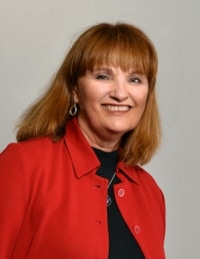 Julie Capaldi is the President of United Way of Pickens County.